In pictures: Drought in Europe exposes sunken ships, lost villages and ominous ‘hunger stones’
Europe has been suffering weeks of drought, with persistent heatwaves leading to evacuations and deaths.
Rivers and lakes have dried, causing major problems for shipping and other vessels. The receding water levels have also revealed some usually-buried treasures.
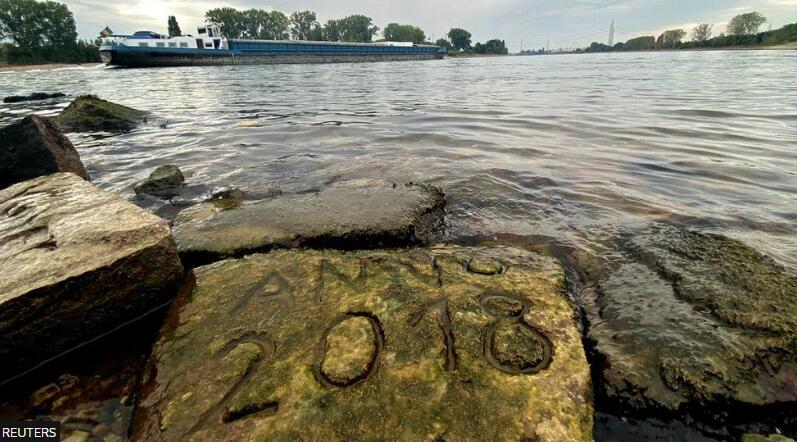
The most ominous of these are “hunger stones”, engraved at the waterline of rivers during previous droughts as a warning to future generations that when the stones are above water, hardship lies ahead.
Most of the stones have reappeared on the banks of the river Elbe, which flows from the Czech Republic through Germany.
One stone, which was first carved as far back as the 15th Century, also surfaced in 1616, when locals inscribed into it the words “if you see me, cry”.
Low water levels in the Danube in Serbia have revealed the sunken remains of World War Two ships, still loaded with explosives.
The ships, found near the town of Prahovo, were part of a Nazi fleet sunk in 1944. More are expected to emerge as the drought continues.
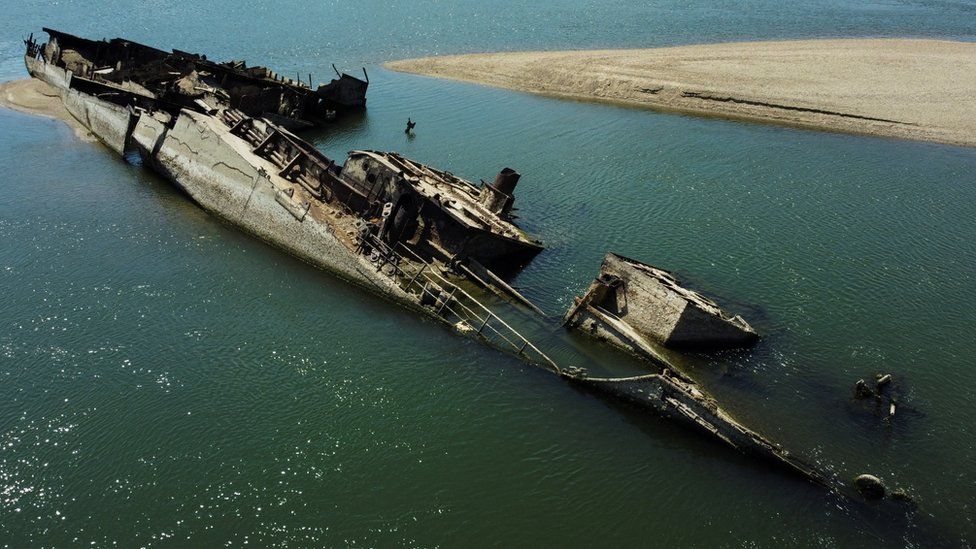 IMAGE SOURCE,REUTERS
Unexploded ordnance has also been found in the River Po in Italy.
About 3,000 people were evacuated from a village near the city of Mantua in July, while experts removed and safely exploded a previously-submerged WW2 bomb.
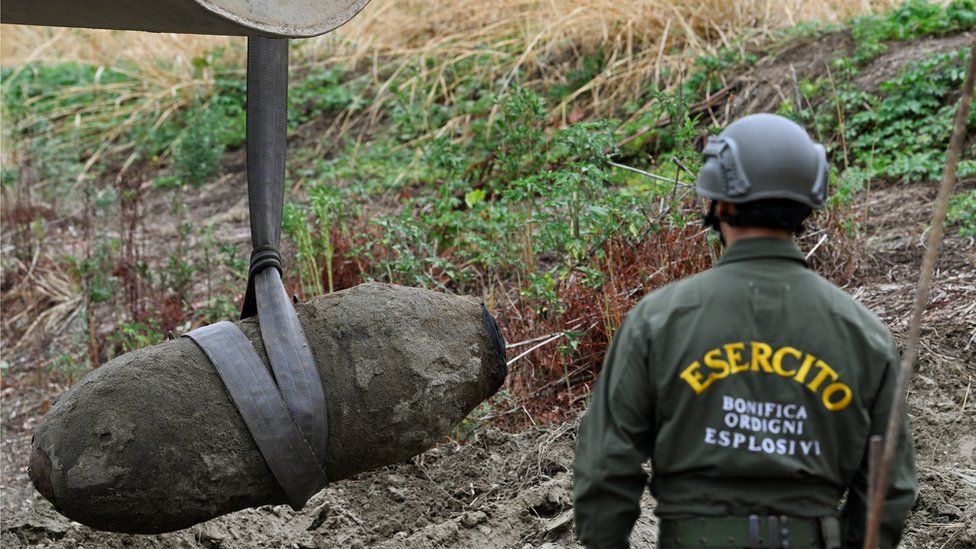 IMAGE SOURCE,REUTERS
A barge used by Germans and sunk in 1943 has also emerged in the River Po.
Locals began to see the Zibello barge as water levels dropped some months ago, and more of it has been revealed as the drought continues.
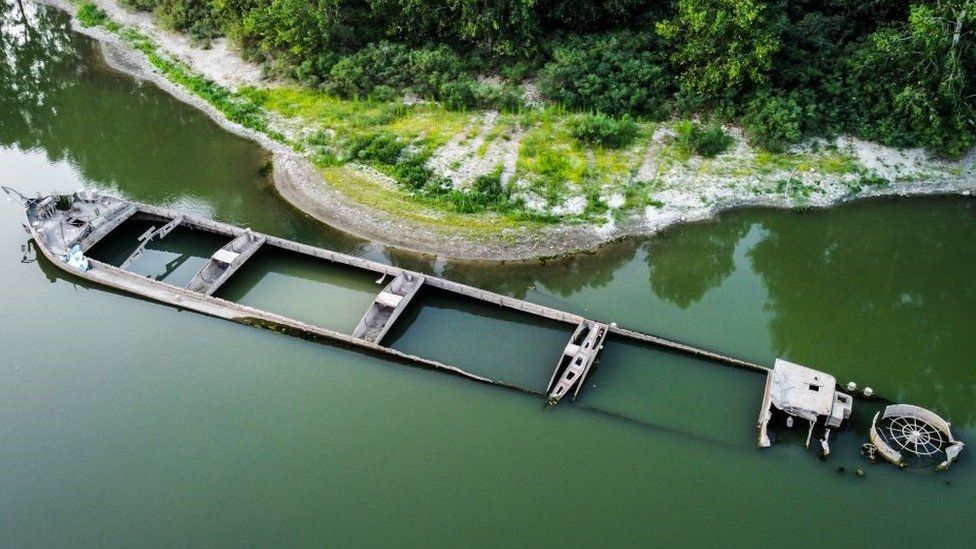 IMAGE SOURCE,GETTY IMAGES
Low levels of the River Tiber in Rome have revealed the ruins of an ancient bridge which may have been built by the Emperor Nero around 50AD.
It has always been possible to see a small part of the ruins at low water level, but much more than usual can now be seen of the structure.
It lies below the site of a modern bridge, the Vittorio Emanuele II.
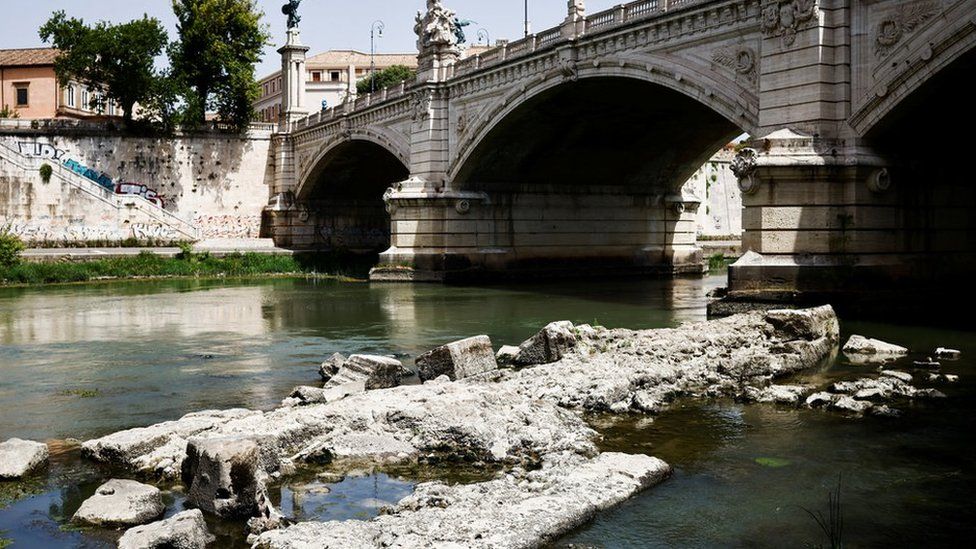 IMAGE SOURCE,GETTY IMAGES
In Spain, the “Spanish Stonehenge” has appeared in the Valdecanas reservoir in the central province of Caceres.
Officially called the Dolmen of Guadalperal, the circle of stones is believed to date back to 5000BC.
They were discovered by an archaeologist in 1926, but the area was flooded in a rural development project in 1963.
Since then they have only been visible four times.
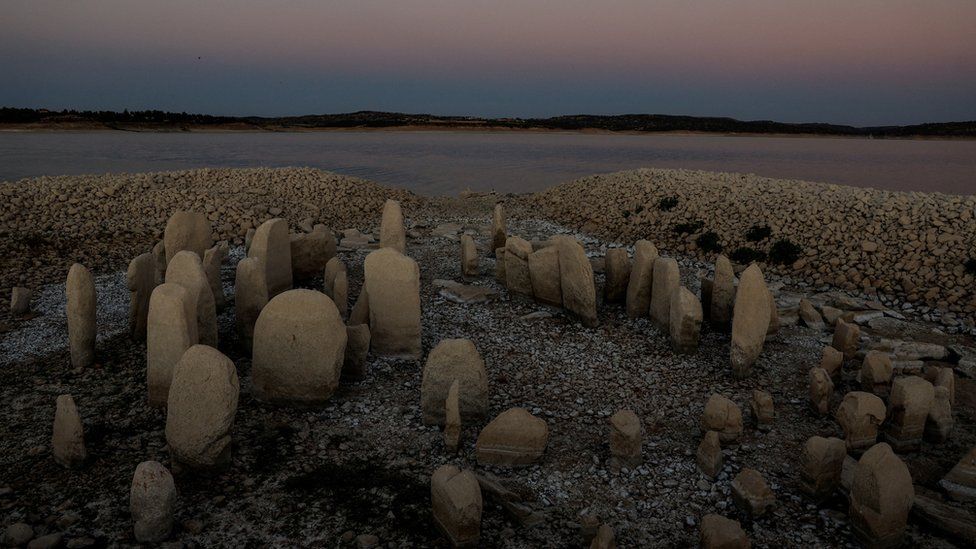 IMAGE SOURCE,REUTERS
In Galicia, on the border with Portugal, a “ghost village” emerged earlier in the year as drought dramatically emptied the waters of a reservoir.
Aceredo was flooded in 1992 to make way for the reservoir. Some of its former residents have returned to look around the now-ruined buildings.
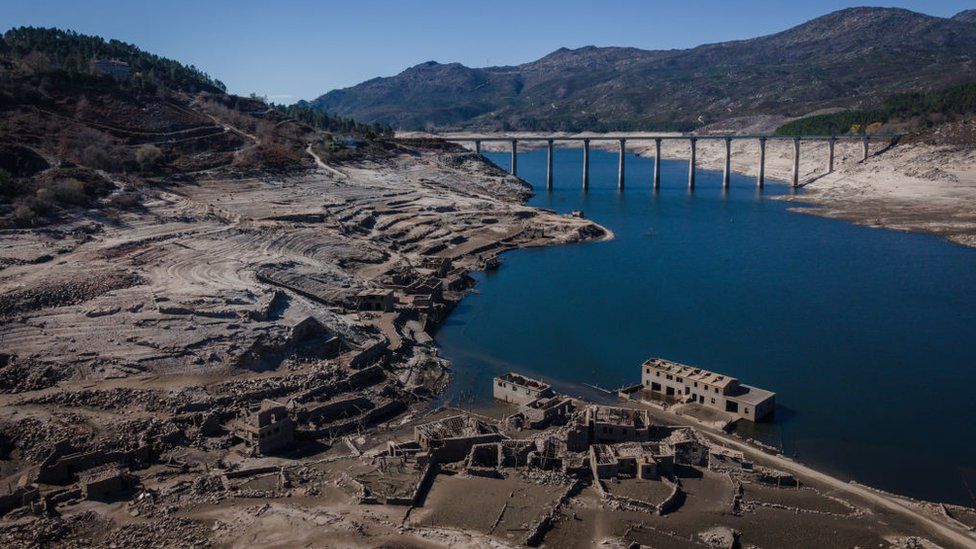 IMAGE SOURCE,GETTY IMAGES
Lost treasures have also been revealed in the UK.
Ruins thought to be of a church in the village of Derwent in Derbyshire have been exposed.
The village was flooded in the 1940s to make way for the Ladybower reservoir.
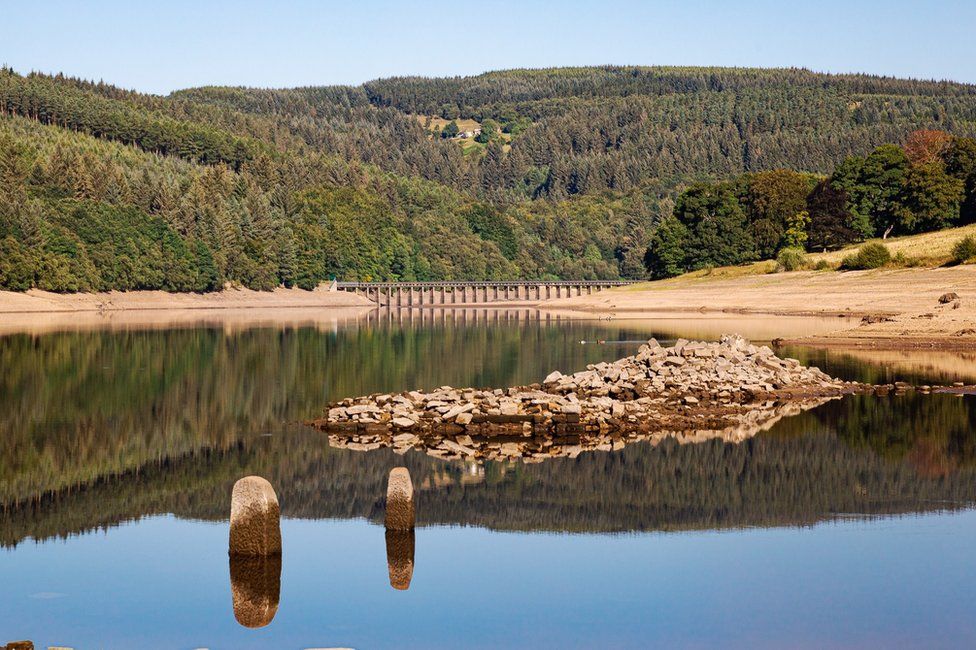 IMAGE SOURCE,TERRY WESTERMAN
The remains of old trees have been exposed at Colliford Lake reservoir in Cornwall.
The area on Bodmin Moor was flooded in the 1980s.
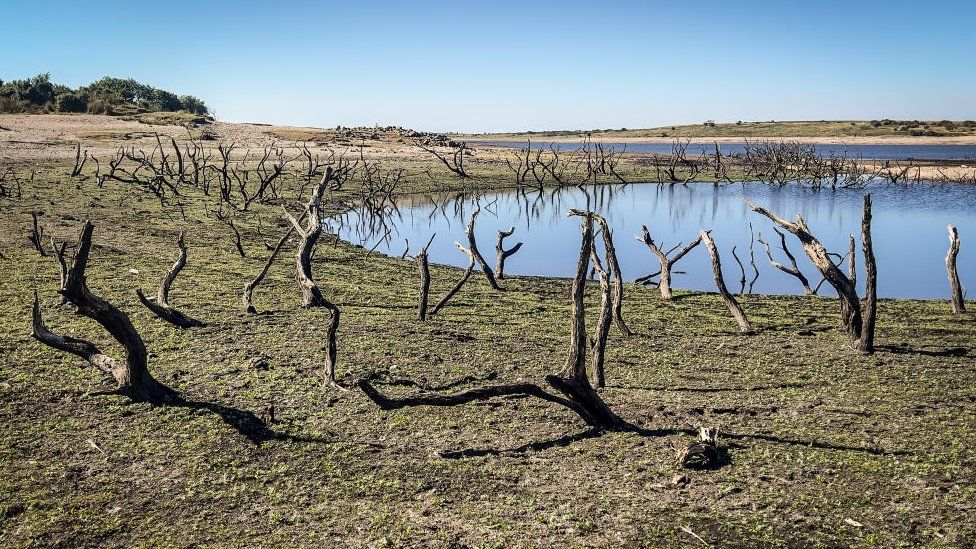 IMAGE SOURCE,GETTY IMAGES
And traces of some 17th Century gardens appeared at Lydiard Park in Swindon, in south-west England, after hot weather killed off grass to reveal impressions in the ground beneath.
Similar “ghost gardens” have also appeared at Longleat, a nearby stately home.
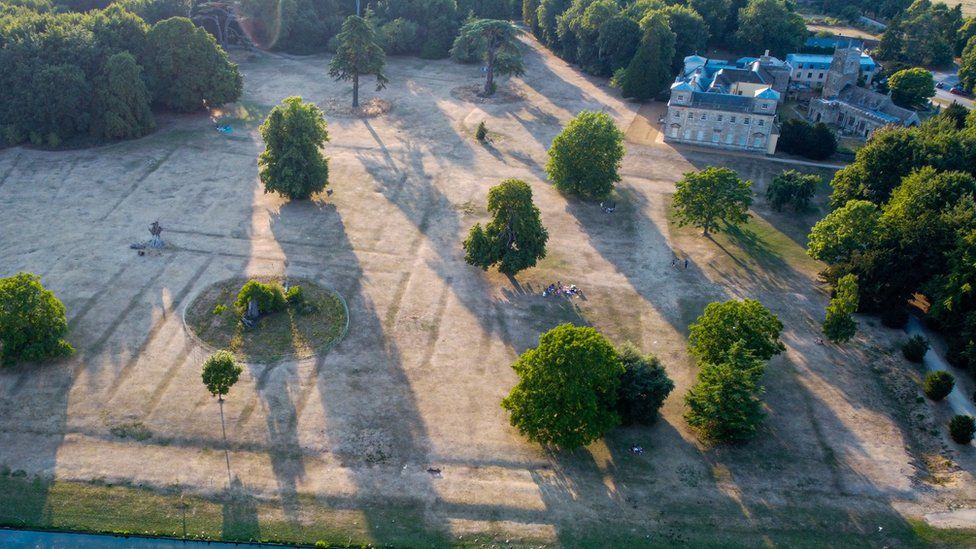 IMAGE SOURCE,PHIL JEFFERIES